Curriculum Intent Statement
Religious Education
Our Mission
 Broughton Hall Catholic High School for Girls is committed to the Catholic education of each individual, nurturing their unique gifts, fostering a caring community, and achieving excellence in all aspects of their spiritual, aesthetic, physical, and academic development. Based on the Sisters of Mercy, the school's mission focuses on developing the whole person, encouraging self-reliance, fostering a spirit of generosity and compassion, and equipping pupils with the skills to become caring, independent adults who can contribute positively to society.
Our RE Curriculum Vision
At Broughton Hall, the RE curriculum sits at the heart of our curriculum. Our programme is driven by a deep commitment to Gospel Values and Mercy Values and the ethos of our Catholic faith. Founded by the Sisters of Mercy, we aim to deliver a rich and meaningful Religious Education experience that nurtures the spiritual, moral, and intellectual development of our students as young women.
Curriculum Foundation
Rooted in the teachings of the Catholic Church, our curriculum integrates the values and principles outlined in the Religious Education Directory of the Bishops of England and Wales. Our programme encompasses a holistic approach to Religious Education, designed to foster an understanding and appreciation of Catholic teachings while encouraging the application of these teachings to real-life situations. We believe that students should not only learn about their faith but also discover how it can guide their choices and actions, shaping their lives and relationships.
Scripture at the Heart
At the heart of our curriculum is the study of Scripture, the sacred text of our faith. Students will explore the richness of the Bible, gaining a deep understanding of its historical context, themes, and messages. Through engaging lessons and discussions, they will learn to interpret Scripture, exploring its relevance to their lives and its teachings on love, justice, compassion, and mercy.
Catholic Doctrine and Teaching
The Catholic Teachings form a cornerstone of our curriculum. Students will explore the core beliefs and doctrines of the Catholic Church, including the Trinity, the life and teachings of Jesus Christ, the Church's moral teachings, the sacraments, and the significance of prayer and worship. Rooted in the tradition of the Sisters of Mercy, we aim to help students develop a mature understanding of their faith, enabling them to articulate their beliefs and engage in thoughtful discussions with respect and empathy, as we "endeavour to love our neighbour and become one family in Christ."
Faith in Action
The application of Catholic Teaching to real-life situations is an essential aspect of our curriculum. By examining contemporary issues and ethical dilemmas, students will develop critical thinking skills and explore how their faith can inform their decision-making. Through case studies and class discussions, students will discern and reflect on the moral implications of their choices and learn to respond to the challenges of the modern world with integrity and compassion. Following the example of Catherine McAuley, students are encouraged to show mercy to those in need and develop a deep sense of social responsibility.
Sacramental Life and Worship
Sacraments and Religious Celebrations hold significant importance in our Catholic faith. Our curriculum ensures that students understand the meaning and significance of the sacraments, such as Baptism, Eucharist and Confirmation. They will also learn about the liturgical year and participate in religious celebrations, fostering a sense of community and reverence for the sacred traditions of our faith.
Philosophical and Ethical Development
In addition to fostering spiritual growth, our curriculum also addresses broader aspects of morals, ethics, and philosophy. Students will explore ethical theories, engage in philosophical discussions, and examine moral frameworks to develop a well-rounded understanding of morality and its applications. Our students are encouraged to embark on a philosophical and ethical quest as they mature into independent young women with strong moral foundations.
Inquiry and Dialogue
Throughout their Religious Education journey, students will be encouraged to explore and respond to 'Big Questions' that arise from their study of Catholic teachings and engage in meaningful dialogues. We believe that asking deep and meaningful questions fosters intellectual curiosity, reflection, and personal growth.
Our Vision for Each Student
From Year 7 to Year 11, our Religious Education curriculum seeks to empower students to embrace their Catholic faith, develop a personal relationship with God, and actively live out the Gospel Values and Mercy Values in their daily lives. Following our school motto "Cor Unum et Anima Una" - One Heart and One Mind - our students develop as confident young women who understand that they are "wholly loved by God in Jesus Christ" and are "fearfully and wonderfully made" (Psalm 139).
Inspired by the Saints and guided by Faith, Hope and Love, we foster self-reliance whilst building a joyful, friendly community where everyone is valued. By fostering knowledge, critical thinking, and a deep sense of social responsibility, we aim to prepare our students to be compassionate, ethical and engaged members of society, guided by the principles of the Catholic faith and inspired by the legacy of Catherine McAuley and the Sisters of Mercy.
"I have come that they may have life, and have it to the full."
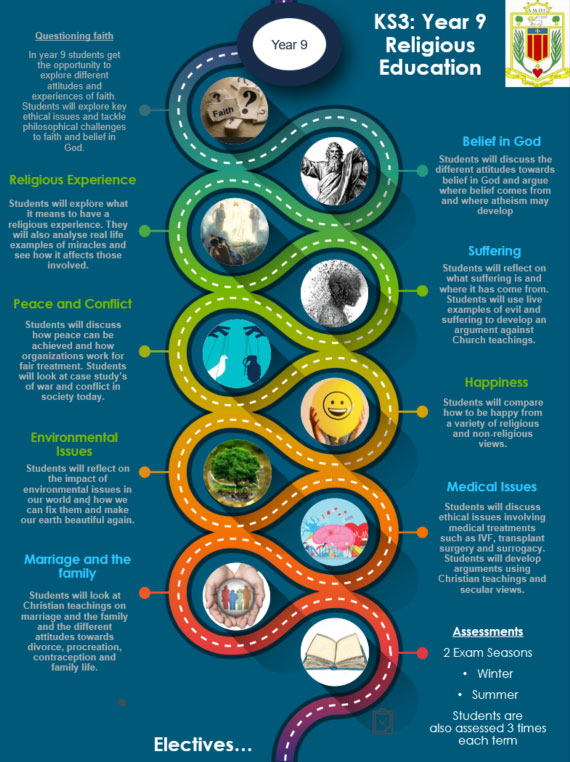
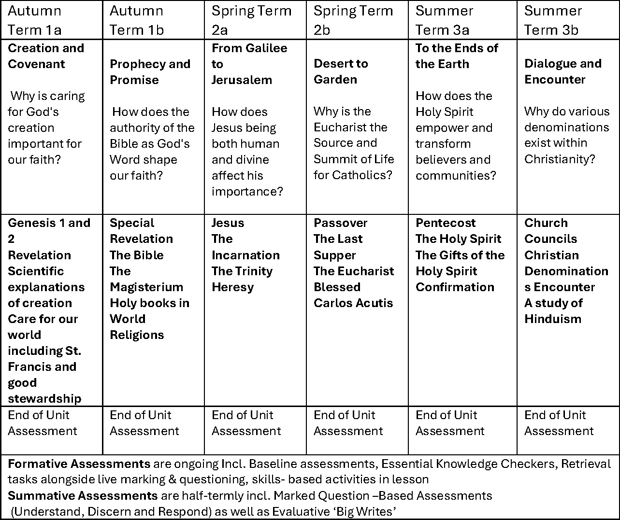
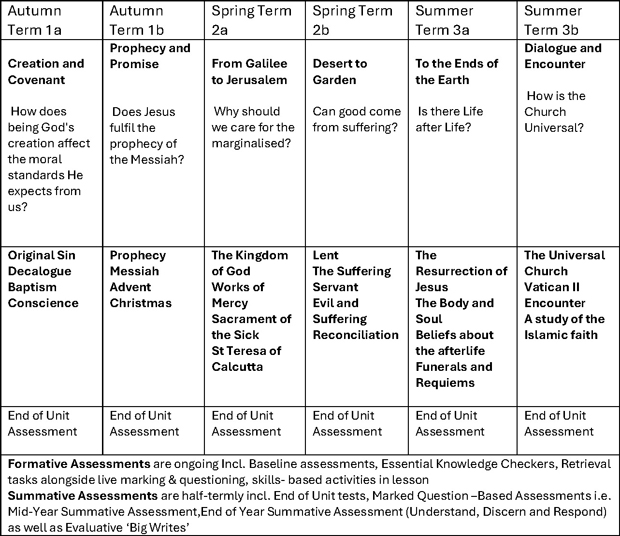
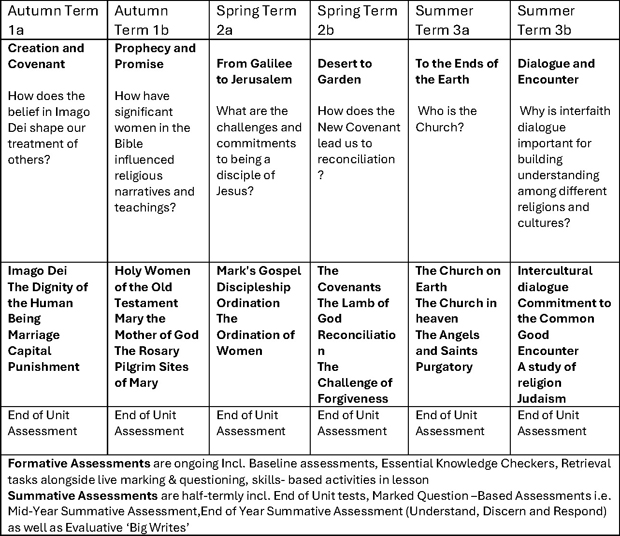
Key Stage 4 Religious Education
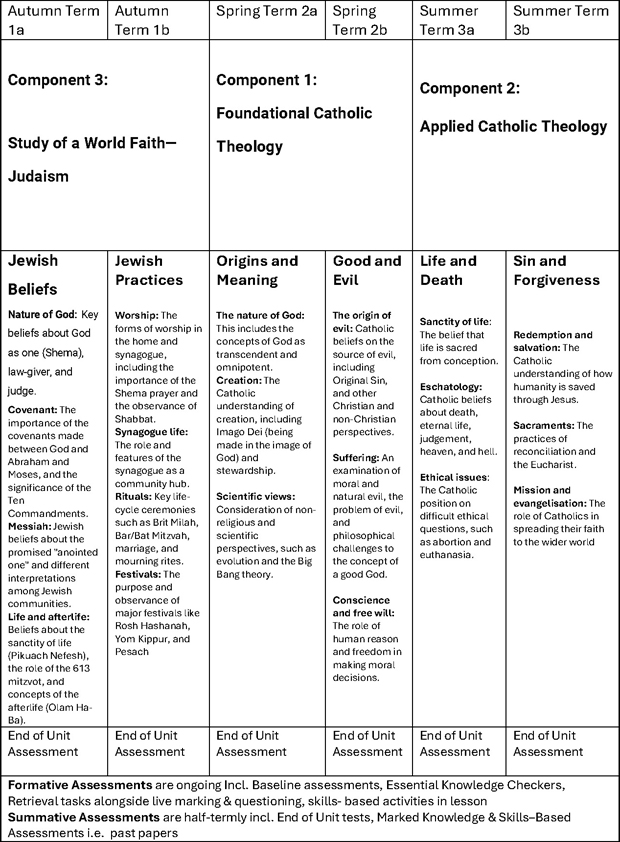
For the Eduqas GCSE Religious Studies Route B course of study, the topics are organised into three components: two on Catholic Christianity and one on Judaism. We begin with Judaism to give students the historical context of Christianity and encounter a new faith as they begin their GCSE studies .This Curriculum design allows us to draw on previous Catholic education to provide a foundation for informed comparison and contrast with Catholic Christianity components later in the course.
Excellence in Catholic GCSE Formation
Transform Your Understanding of Faith, Ethics, and Human ExperienceWhy GCSE Religious Education at Broughton Hall?
Our GCSE Religious Studies programme isn't just about passing an exam - it's about developing the critical thinking, ethical reasoning, and cultural understanding that will serve you throughout life. Following the prestigious Eduqas Route B pathway, this course combines rigorous academic theology with real-world application, preparing you for success in higher education and beyond.
What makes our programme exceptional?
- Academic Excellence: Building on our outstanding KS3 foundation with specialist Catholic theology
- Cultural Intelligence: Deep interfaith understanding through comprehensive Judaism study
- Critical Thinking: Advanced analytical skills that transfer across all subjects
- Ethical Leadership: Moral reasoning abilities essential for modern careers
Course Structure Overview
-
Eduqas Route B - The Catholic Specialist Pathway
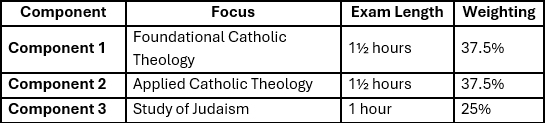
- 75% Catholic Christianity: (Components 1 & 2) - Deep theological exploration
- 25% Judaism: (Component 3) - Comprehensive interfaith study
- Expert Exam Preparation - Carefully designed exam-focused techniques taught throughout
Two-Year Pathway
Year 10 Journey ( Academic Year 2025 onwards)Autumn: Component 3 - Judaism (beliefs, practices, festivals)
Spring: Component 1 - Catholic foundations (creation, good/evil)
Summer: Mock Exam - skills, confidence and consolidation
Year 11 Journey ( Academic Year 2026 onwards)
Autumn: Component 2 - Applied Catholic theology (life/death, sin/forgiveness)
Spring: Intensive revision and exam preparation
Summer: GCSE examinations
Assessment Structure
Journey Through the Components
Component 1: Foundational Catholic TheologyWhere we explore the big questions...
Dive deep into Catholic teaching on creation, science and faith, and the fundamental nature of good and evil. You'll engage with Augustine's sophisticated theology, examine how Catholic teaching responds to modern challenges like evolution and human dignity, and analyze sacred art from Michelangelo to contemporary expressions of faith.
Component 2: Applied Catholic Theology Where faith meets real-world ethics...
Tackle the most challenging questions of our time: What does it mean to live and die well? How do we balance justice with mercy? Explore Catholic perspectives on euthanasia, capital punishment, salvation, and the Church's mission in the modern world. This is theology in action - faith responding to contemporary ethical dilemmas.
Component 3: Study of Judaism Where we build bridges of understanding...
Immerse yourself in Jewish faith, culture, and practice. From ancient covenant relationships to modern Orthodox and Reform communities, you'll develop crucial interfaith literacy. Explore Jewish festivals, lifecycle events, and the rich tradition of Torah study that has shaped Western civilization.
Career Pathways: Where GCSE Religious Education Takes You
The skills you develop in Religious Education are among the most sought-after in today's economy:Where we explore the big questions...
Dive deep into Catholic teaching on creation, science and faith, and the fundamental nature of good and evil. You'll engage with Augustine's sophisticated theology, examine how Catholic teaching responds to modern challenges like evolution and human dignity, and analyze sacred art from Michelangelo to contemporary expressions of faith.
Media & Communications
Your deep understanding of cultural sensitivity, belief systems, and ethical frameworks makes you invaluable in journalism, broadcasting, public relations, and digital media. You'll communicate with nuance and respect across diverse communities.
Law & Justice
The analytical thinking, ethical reasoning, and understanding of moral philosophy you develop provides excellent preparation for legal careers. Many top barristers and judges have Religious Studies backgrounds - you'll understand both the letter and spirit of justice.
Healthcare & Medicine
Your knowledge of ethics, life and death issues, and cultural beliefs is essential in modern healthcare. From medical ethics committees to patient care in diverse communities, you'll bring crucial sensitivity and moral reasoning to healing professions.
Business & Economics
Corporate social responsibility, ethical leadership, and cultural intelligence are now essential business skills. Your understanding of moral frameworks complements economics perfectly - you'll shape ethical business practices in our globalized world.
Politics & Public Policy
Your ability to analyze complex ethical issues, understand diverse communities, and think critically about justice and society provides excellent preparation for careers in politics, civil service, NGOs, and international relations.
Creative Industries
From acting and drama to creative writing and film-making, your deep understanding of human motivation, moral complexity, and cultural narratives enriches artistic expression. Many successful actors and writers credit Religious Studies with developing their understanding of character and motivation.
Education & Training
Beyond teaching Religious Education itself, your communication skills, cultural understanding, and ability to discuss sensitive topics respectfully prepare you for educational leadership, training roles, and human resources careers.
Social Work & Counselling
Your understanding of diverse belief systems, ethical frameworks, and human dignity provides essential foundations for caring professions, community work, and therapeutic roles.
Why Students Choose This Course
"The skills I developed in RE helped me excel in my law degree - the ethical reasoning and analytical thinking were invaluable.""Understanding different faiths and cultures gave me a huge advantage in international business."
"The course didn't just prepare me for university - it prepared me for life."
Ready to Begin Your Journey?
Contact: downhamc@broughtonhall.com | 01524 734350